


A hidden water leak almost never shows up as a puddle. It shows up as a slightly higher bill, a smell you can't place, or a warm spot under your bare feet. By the time water is visibly pooling, the leak has usually been running for weeks.
The good news: most hidden leaks give you clear warning signs long before they cause real damage. Here are seven to check today, what each one can cost if you let it ride, and how to know when it's time to bring in help.
This is the single most reliable early warning. Pull your last three or four bills and compare them. If your usage climbed but your habits didn't, water is going somewhere you can't see.
The math adds up faster than people expect. The average U.S. family of four pays around $78 a month for water. A toilet that runs quietly can waste over 6,000 gallons a month and add roughly $70 to your bill. A pinhole leak in a main line can push 10,000-plus gallons a month straight into the ground.
Ignore it and you pay that surcharge every single month, while the underlying problem usually gets worse, not better. A bill that keeps creeping up is your cue to run the meter test below.
This is the closest thing to a free at-home leak detector, and it takes about 20 minutes. Turn off every faucet, appliance, and water-using fixture in the house, then follow these steps:
Your nose often catches a slow leak before your eyes do. Water trapped behind a wall, under a cabinet, or beneath flooring feeds mold and mildew, and that produces a persistent damp, earthy smell, most noticeable in closed rooms, closets, and bathroom vanities.
Ignore it and the problem stops being a plumbing bill and starts being a remediation bill. Mold cleanup and drywall repair routinely run into the thousands, and it's the kind of damage insurers scrutinize hard. A smell you can't scrub away is worth taking seriously.
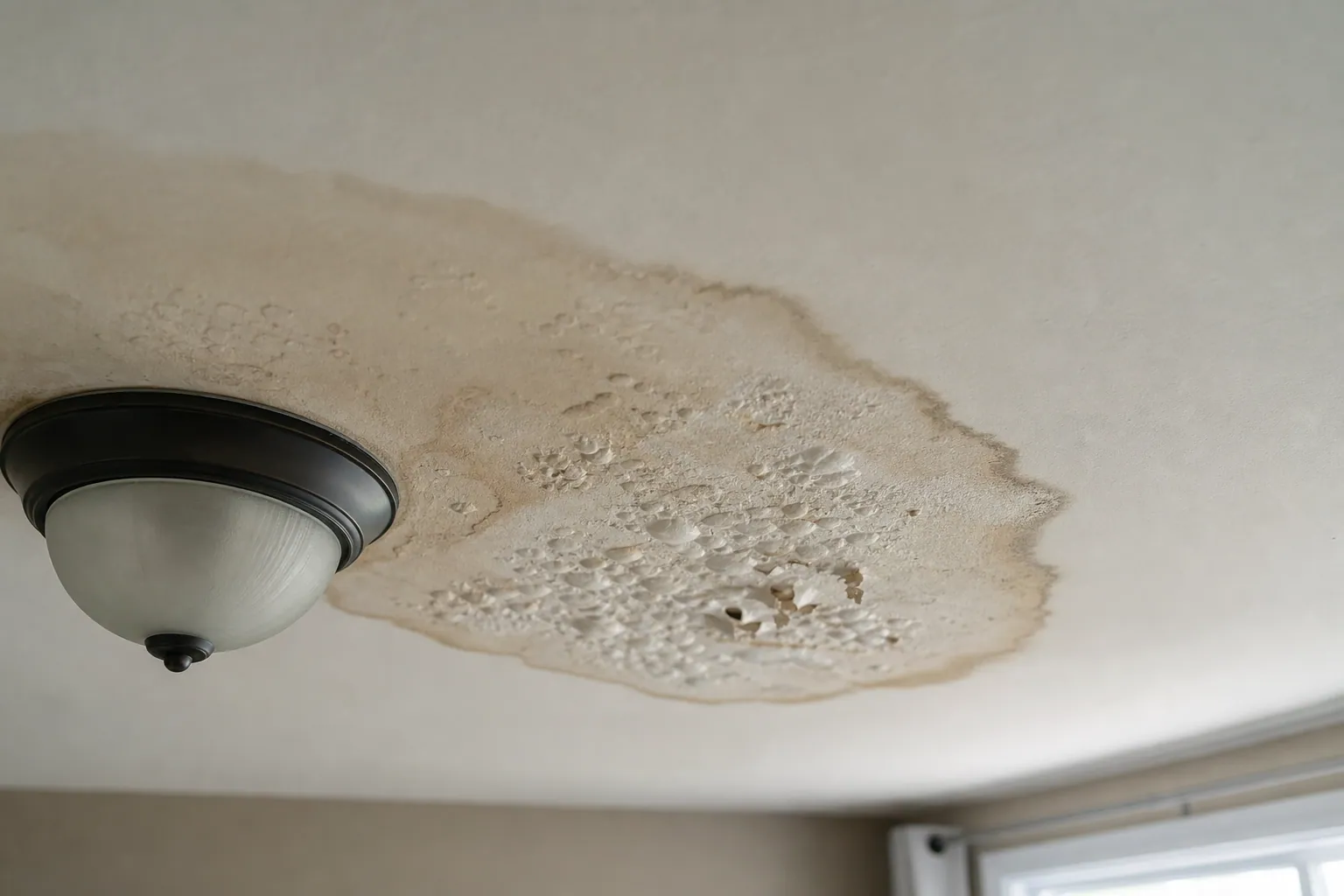
Leaks leave marks. Watch for yellowish-brown rings on ceilings, paint or wallpaper that bubbles or peels, or a soft, spongy patch on a wall. These usually mean water has been sitting long enough to soak the building materials, so the leak is rarely brand new by the time a stain appears.
A distinctly warm patch on a tile or concrete floor is its own red flag. On a slab foundation, that can be a hot-water line leaking underneath, one of the classic signs of a slab leak, and the one homeowners most often miss because it feels almost pleasant underfoot.
This is the sign you least want to sit on. Slab leaks can undermine a foundation, and repairs are among the priciest in plumbing, typically $630 to $4,400 and averaging around $2,280 once detection and access are included. Caught early it's a targeted fix; caught late it can mean rerouting lines and repairing the slab itself.
When pressure drops at a faucet or shower for no obvious reason, water may be escaping before it reaches the tap. A leak in a supply line bleeds off pressure the same way a hole in a garden hose does.
Pressure changes have plenty of innocent causes too, from a clogged aerator to city-side work. But a steady, unexplained decline, especially paired with any other sign on this list, points toward a leak that will keep worsening until it's found.
Stand in a quiet house and listen. A faint hiss, trickle, or drip when every fixture is off means water is moving somewhere it shouldn't. Put an ear near walls and along the floor and the sound often gets louder near the source.
On its own it's easy to dismiss. Combined with a creeping bill or a moving meter, it's confirmation. A leak you can hear is a leak that's actively wasting water and, potentially, soaking something structural.
One sign might be a coincidence. Two or more, especially a higher bill plus a moving meter, and you almost certainly have a leak. From there the goal is to find it without tearing open walls or floors chasing a guess.
Pinpointing the exact spot is where a licensed plumber earns their keep. Pros use acoustic sensors, thermal cameras, and pressure tests to locate a leak inside a wall or under a slab with no demolition. Professional leak detection typically runs $150 to $500, often $250 to $400, and it's cheap insurance against a repair that balloons because the water kept running or the leak got misdiagnosed.
If you've spotted even one of these signs, run the meter test today. If the needle moves, book a leak detection visit before a small leak becomes a big one. Acme Plumbing is licensed to find it and fix it right the first time.