


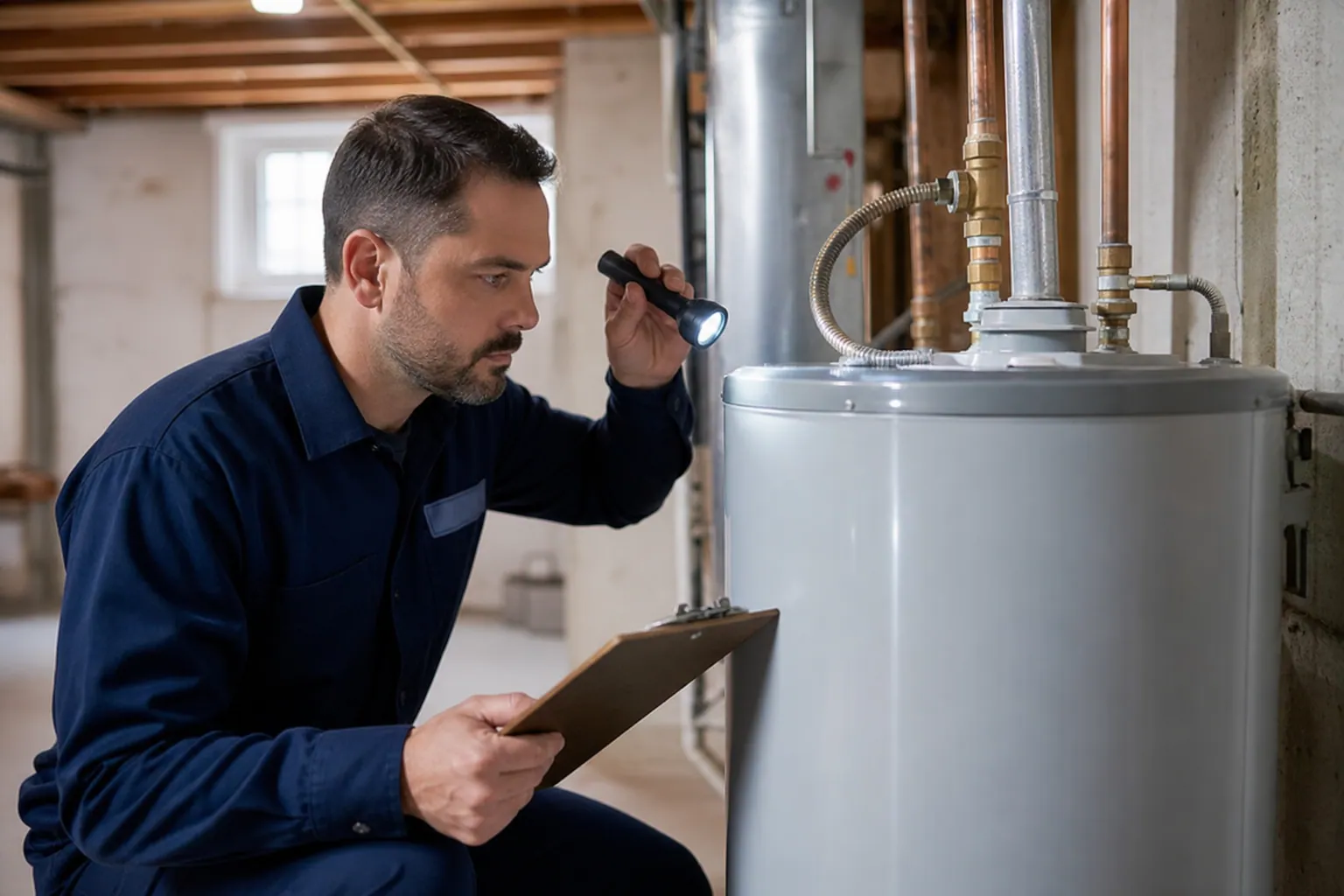
Your water heater is acting up, and you're standing in the basement wondering if this is a quick fix or the start of a bigger bill. It's a fair question, and the honest answer isn't 'always repair' or 'always replace.' It depends on three things you can check in about five minutes: how old the tank is, whether it's rusting, and how hard it's making your energy bill work.
Below is how to think it through, what the common repairs actually cost in 2026, what a new unit runs, and a simple rule of thumb that gets you to the right call most of the time.
Before you price anything out, look at these. They matter more than the specific part that failed.
Start with the tank itself, because a repair only makes sense if the tank has good years left in it.
Plenty of failures are genuinely fixable, and on a younger tank they're worth doing. Here are the usual suspects and typical installed prices, parts and labor together, for 2026.
These are ballpark ranges. Your area, your unit, and how buried the part is all move the number.
If the tank is old or rusting, replacement is the move. Here's what full installed replacements typically run in 2026, including removal and haul-away of the old unit.
Tankless costs more up front but lasts longer, around 20 years, and trims standby energy loss. Whether that math works for you depends on your usage and how long you plan to stay in the home.
When you're on the fence, run this quick gut check:
If the tank is under 8 years old and not rusting, repair it. If it's over 10, rusting, or the repair quote is more than half the cost of a new unit, replace it. Everything between 8 and 10 is a judgment call, and that's where age plus efficiency tips the scale.
A related version pros use: if the repair costs more than half of a replacement and the unit is past the halfway point of its life, put the money toward a new one instead.
Swapping an electric element or a thermostat is within reach for a handy homeowner who kills the power and follows the steps carefully. But water heaters combine water, electricity or gas, and pressure, and a few jobs genuinely deserve a pro.
Anything involving the gas supply, a full tank replacement, the T&P valve, or venting is where a licensed plumber like Acme Plumbing should handle the hard parts. It's not about upselling you; it's that gas leaks, scalding, and improper venting are exactly the failures you don't want to learn about the hard way. A licensed install also keeps your warranty and local code intact.
Repair a young, rust-free tank; the common fixes are cheap and worth it. Replace an old or corroding one, because you're only delaying the inevitable and the efficiency gains help close the gap.
Check the age on the label, look for rust, and glance at your energy bill. Those three answers, plus the half-the-cost rule, will point you the right way almost every time.